Tag Archives: Social Sciences

Scholars’ Circle – Book Author Interview on “Cold War Football: A History in Ten Matches” and 1973 Coup D’État in Chile – July 26, 2026

The 2026 World Cup has finished and the final two teams, Spain and Argentina, have stirred up old notions of what we call soft power. Sports play a large role in how countries display their soft power, but it can often be confused for cooperation. Indeed all power is contested and soft power is no exception, and the contest is clear when two national teams meet in a sports contest.

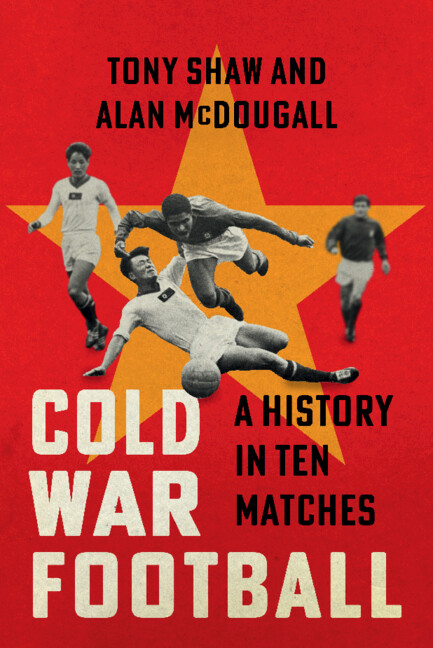
Book cover - Red with a Yellow star and collage of football players with the tile Cold War Football - A history in Ten Matches.

Examples of soft power interactions in sports include the US beating the USSR in hockey in the 1980 Winter Games or the Soviets defeating the US in basketball at the 1972 Olympics during the height of the Cold War. No sport, however, garners more international interest than soccer (or what the rest of the world calls football). Our guests have written a new book that defines the Cold War rivalry through the lens of ten historic soccer matches. The book is called Cold War Football: A history in Ten matches. [ dur: 33mins. ]

We revisit the September 11th, 1973 coup in Chile that toppled democratically elected Salvador Allende and installed the dictator Augustin Pinochet. We’ll hear what happened, explore the latest revelations and how Chileans are dealing with their past now.  [ dur: 25mins. ]

For a transcript of this interview, please visit: TheBigQ

This interview was recorded September, 2014.

This program is produced by Ankine Aghassian, Doug Becker, Sudd Dongre, and Anna Lapin.

Politics and Activism, Diplomacy, Social Sciences, Organized Sports

Scholars’ Circle – Book Author interview – North : Future of Post climate America – November 23, 2025

Climate change will lead to climate migration. There has been a renewed interest in adaptation strategies. Mitigation efforts seek to limit the amount of greenhouse gases in the environment to slow climate change. But adaptation recognizes that the climate has changed and we as a society and as a planet must adapt to these rising temperatures and the changing ecosystem. We will explore some of the challenges for adaptation.

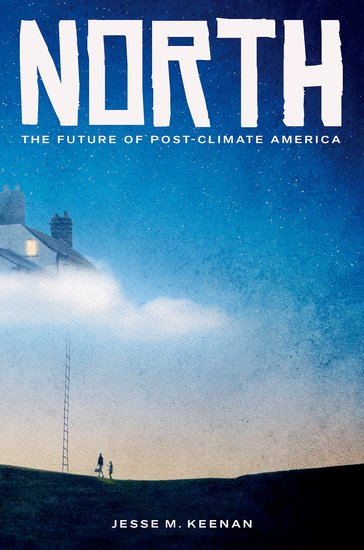
We Interview Jesse M.Keenan author of the book North: Future of Post Climate America. He surveys places which are vulnerable to climate change effects and what are the state and regional implication of migration North in America. [ dur: 26mins. ]

bookcover - sketch of elevated home
  • Jesse M. Keenan is Favrot II Associate Professor of Sustainable Real Estate and Urban Planning at the School of Architecture and the Built Environment. His research advances the interdisciplinary fields of sustainable real estate and infrastructure finance and development. He is the author of the book North: Future of Post Climate America.

How is climate change affecting place, where we live, who can move off the coasts, and who is immobile despite living in climate-threatened zones? And what does it mean for the well-being, the economy, politics and for the regions themselves? [ dur: 32mins. ]

  • Jesse M. Keenan is Favrot II Associate Professor of Sustainable Real Estate and Urban Planning at the School of Architecture and the Built Environment. His research advances the interdisciplinary fields of sustainable real estate and infrastructure finance and development. He is the author of the book North: Future of Post Climate America.
  • Matt Hauer is Charles B. Nam Associate Professor, Department of Sociology – Center for Demography and Population Health at Florida State University. He is the author of Sea-level rise and human migration.

This program is produced by Doug Becker, Ankine Aghassian, Maria Armoudian, Sudd Dongre and Anna Lapin .

Scholars’ Circle – Reforming Federal Emergency Management Agency of USA territories – February 2, 2025

Climate change is intensifying natural disasters such as hurricanes, storms, and wildfires and making them more frequent. Yet President Trump has proposed eliminating the federal emergency management agency, FEMA, that responds to disasters. Why was FEMA created and how effective has it been? [ dur:58mins. ]

Reference: Timeline of FEMA Disaster handling in the past ( co-authored by Claire Rubin ).

This program is produced by Ankine Aghassian, Doug Becker and Sudd Dongre.

Scholars’ Circle – Meskhetian Turks, their struggle for Self Determination ; Social behavior due to unconscious mind – December 8, 2024

History of Meskhetian Turks who are stateless and struggling to exist as people among nations like Turkey, Georgia, Romania and Armenia. We will discuss this population and its unique challenges in Russia and its population also has a unique and important position within the United States. [ dur: 32mins. ]

And a look at how the unconscious mind and biological predispositions effect political outcomes, waging war and prejudice biases. [ dur: 26 mins. ]

This program is produced by Ankine Aghassian, Doug Becker and Sudd Dongre.

Scholars’ Circle – Election by gerrymandering and a tribute to Professor Philip Zimbardo – October 27, 2024

First, we discuss gerrymandering and redistricting and what it means for the upcoming elections on First Tuesday of November  2024.

Then, we pay tribute to Philip Zimbardo, the psychologist behind the infamous Stanford experiments. He died at home in San Francisco on Oct. 14, 2024 he was 91 in San Francisco. This excerpt from his interview with Scholars’ Circle in Feb. of 2016. You can find his full interview here.

This program is produced by Ankine Aghassian, Doug Becker and Sudd Dongre.

Scholars’ Circle – Private Military Corporations and State responsibilities – July 14, 2024

Private Military Corporations have become a growing element of the warfighting landscape. States have historically had a monopoly on the use of military force. But private corporations challenge this monopoly. How much do they increase the lethality and likelihood of war? How much can private corporations be regulated? And what are the challenges to regulation? We explore the political, military, legal, and socioeconomic implications of private military corporations. [ dur: 58mins. ]

This interview was recorded in July 2023.

This program is produced by Doug Becker, Ankine Aghassian, Maria Armoudian and Sudd Dongre.

Scholars’ Circle – Addressing Homelessness in America, what is needed? – December 3, 2023

Over a half million Americans are currently homeless. What is causing this crisis? And what are the solutions? How do we get the resources to build the housing we need to address the homelessness crisis?

We discuss why services to address mental health and addiction are essential to resolving the homelessness crisis. [ dur: 58mins. ]

This recording is from December 2022.

This program is produced by Ankine Aghassian, Doug Becker, Melissa Chiprin, Mihika Chechi, and Sudd Dongre.

Scholars’ Circle – Understanding Disinformation in our time – October 8, 2023

When Elon Musk promised that Twitter ( re-branded as X ) will allow a wider range of content, including some that was previously banned as hate speech, disinformation, or conspiracy-centric, concerns over disinformation in political discourse heightened. But the challenge of democratic discourse in light of misinformation and disinformation is a historic challenge. Social media just speeds the process. Yet a significant concern is discerning who best to regulate what constitutes disinformation, in light of the political power of censorship.
We look at how disinformation has spread worldwide, shifting politics and challenging democracies. What are the most effective ways to counter disinformation? How might it be different for states, than for individuals? [ dur: 58mins. ]

Recorded May 2022.

This program is produced by Ankine Aghassian, Doug Becker, Melissa Chiprin and Sudd Dongre.

Scholars’ Circle – Insights into Private Military Corporations, their function and deployment by State and international corporations – July 23, 2023

Private Military Corporations have become a growing element of the warfighting landscape. States have historically had a monopoly on the use of military force. But private corporations challenge this monopoly. How much do they increase the lethality and likelihood of war? How much can private corporations be regulated? And what are the challenges to regulation? We explore the political, military, legal, and socioeconomic implications of private military corporations. [ dur: 58mins. ]

This program is produced by Ankine Aghassian, Doug Becker, Melissa Chiprin and Sudd Dongre.

Scholars’ Circle – Politics, Violence and Memory The new social science of the Holocaust – April 30, 2023

New research on the Holocaust, on Jewish resistance and local collaboration in the killing offers insights into genocides, atrocities, and political violence. We discuss this research and other social science findings about the Holocaust in a new book Politics, Violence, Memory: The New Social Science of the Holocaust.

How does historical memory make researching the Holocaust a greater challenge? [ dur: 58mins. ]

Together they are editors of Politics, Violence, Memory: The New Social Science of the Holocaust.

Excerpt from the publisher:

Politics, Violence, Memory highlights important new social scientific research on the Holocaust and initiates the integration of the Holocaust into mainstream social scientific research in a way that will be useful both for social scientists and historians. Until recently social scientists largely ignored the Holocaust despite the centrality of these tragic events to many of their own concepts and theories.
In Politics, Violence, Memory the editors bring together contributions to understanding the Holocaust from a variety of disciplines, including political science, sociology, demography, and public health. The chapters examine the sources and measurement of antisemitism; explanations for collaboration, rescue, and survival; competing accounts of neighbor-on-neighbor violence; and the legacies of the Holocaust in contemporary Europe. Politics, Violence, Memory brings new data to bear on these important concerns and shows how older data can be deployed in new ways to understand the “index case” of violence in the modern world.

This program is produced by Ankine Aghassian, Doug Becker, Mihika Chechi, and Sudd Dongre.