Welcome to The Scholars’ Circle
Producers: Maria Armoudian (host), Doug Becker (host), Ankine Aghassian & Melissa Chiprin
contact us : host (at) scholarscircle.org
The Scholars’ Circle is a weekly production. Our library contains interviews from 2011 to present.
Below are our 10 most recent recordings.
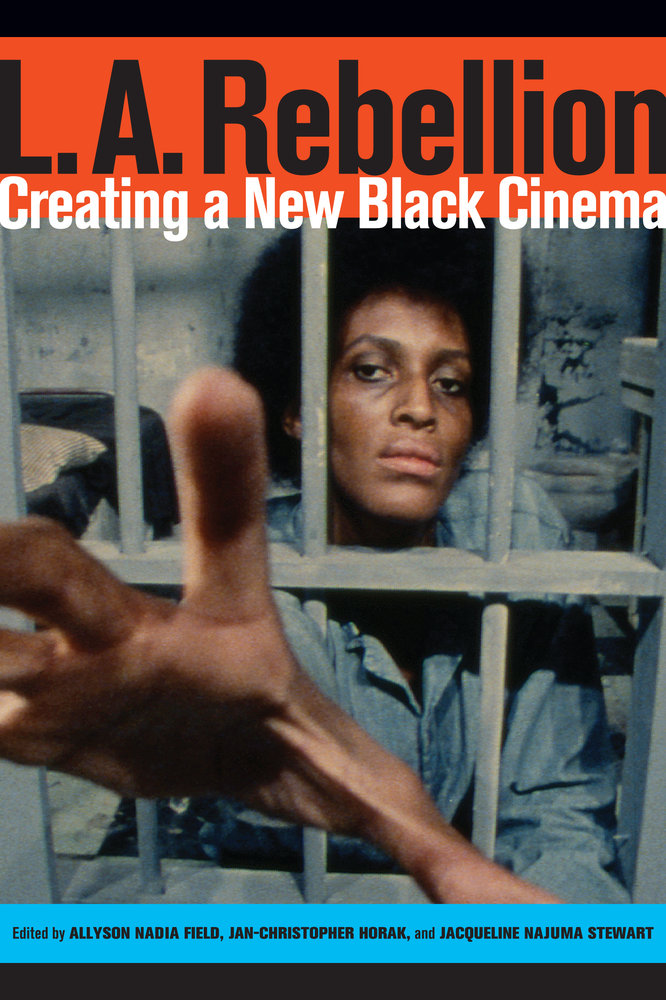
In the 1960s and 70s, a group of black filmmakers at UCLA produced a diverse collection of films to challenge Hollywood’s depiction of black communities.
The LA Rebellion presented films with uniquely black stories. What was this movement and what did it accomplish? [ dur: 30mins. ]
UCLA archive of L.A. Rebellion for Black Cinema can be found here. Some films from this collective :
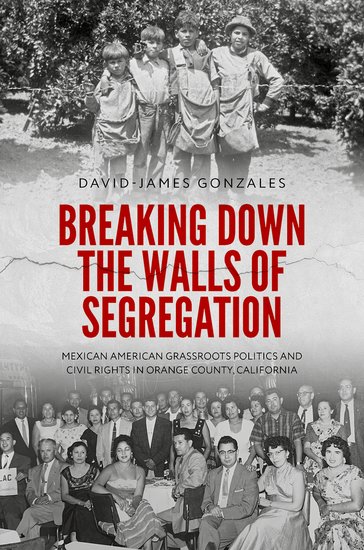
California’s historic segregation of Mexican-Americans contrasted with the South’s version of segregation. In California, who did this segregation serve? Our guest confirms it was the interests of “citrus capitalism” in Orange County. The famous Supreme Court Case Broad v Board of Education challenged segregation in public schools. But there was another precedent, the Mendes et al case, that challenged segregation and education in California against Mexican-Americans. [ dur: 28mins. ]
This program is produced by Doug Becker, Ankine Aghassian, Maria Armoudian, Anna Lapin and Sudd Dongre.
Arts and Humanities, Family / Education, Politics and Activism, Society and Culture, Film, Civil Liberties, Racism, Schools
Podcast: Play in new window | Download
Subscribe:
How do people become addicted to social media and what are the implications of such an addiction? [ dur: 30mins. ]
Most of our activity on the internet interacts with posts, memes and videos that are driven by algorithms. How might algorithms be biased, racist, or sexist, and how might they amplify those biases in us? [ dur: 28mins. ] Full length of this interview can be found here.
This program is produced by Doug Becker, Ankine Aghassian, Maria Armoudian, Anna Lapin and Sudd Dongre.
Politics and Activism, Science / Technology, Computers and Internet, Racism
Podcast: Play in new window | Download
Subscribe:
Health care outcomes in the U.S. differ substantially depending on race. How much are health care discrepancies based on structural and historical racism? What needs to change to promote health justice in the U.S. and what kinds of policies are needed to promote this change? How important is diversity of health care providers in building a more just healthcare system? [ dur: 58mins. ]
This program is produced by Doug Becker, Ankine Aghassian, Maria Armoudian, Anna Lapin and Sudd Dongre.
Health, Politics and Activism, Medicine , Racism
Podcast: Play in new window | Download
Subscribe:
Under what circumstances might climate change lead to negative security outcomes? Over the past fifteen years, a rapidly growing applied field and research community on climate security has emerged. While much progress has been made, we still don’t have a clear understanding of why climate change might lead to violent conflict or humanitarian emergencies in some places and not others.
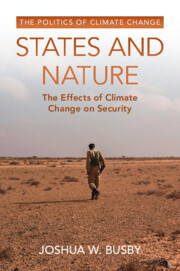
Busby develops a novel argument – based on the combination of state capacity, political exclusion, and international assistance – to explain why climate leads to especially bad security outcomes in some places but not others. This argument is then demonstrated through application to case studies from sub-Saharan Africa, the Middle East, and South Asia. This book will provide an informative resource for students and scholars of international relations and environmental studies, especially those working on security, conflict and climate change, on the emergent practice and study of this topic, and identifies where policy and research should be headed. [ dur: 38mins. ]
With protests rocking Iran, how much are these protests historically consistent with the long history of protests in Iran. We explore this history in light of the new round of protests How much more violent has the Iran state been against protesters? [ dur: 20mins. ]
This program is produced by Doug Becker, Ankine Aghassian, Maria Armoudian, Anna Lapin and Sudd Dongre.
Climate Change, Human Rights, War / Weapons, Refugees, Bangladesh, India, Iran, Syria, Lebanon, Security
Podcast: Play in new window | Download
Subscribe:
In support of the US peace plan for Gaza, President Trump proposed a “Board of Peace” as a transitional governmental authority to ensure Israeli military withdrawal from the territory. It was empowered by the UN Security Council to act on the organization’s behalf as a presumably neutral body to ensure the delivery of humanitarian assistance, rebuild the region that has been physically devastated from war, and oversee security in the return of refugees who have fled the conflict. But as introduced by the American President at the World Economic Forum meetings in Davos in January, it has become a controversial body. Trump advanced a vision of the body, one which includes a payment of one billion dollars (to whom it is still unclear) that could challenge the UN. On today’s show we start with an exploration of this new vision for the organization advanced by the US. [ dur: 28mins. ]
The Board of Peace was initially and ostensibly created to govern Gaza in light of a peace agreement with the intention of removing Israeli military forces in exchange for a neutral transitional government. This was endorsed by the United Nations Security Council in Resolution 2803 with very specific tasks outlined, including aiding in the creation of Palestinian governance, the physical and economic reconstruction of the war-torn territory, the delivery of public services and humanitarian assistance, and the return of refugees. In this segment, we examine the Board’s ability to accomplish its defined set of goals. [ dur: 30mins. ]
This program is produced by Doug Becker, Ankine Aghassian, Maria Armoudian, Anna Lapin and Sudd Dongre.
Politics and Activism, Middle East, Occupied Palestine
Podcast: Play in new window | Download
Subscribe:
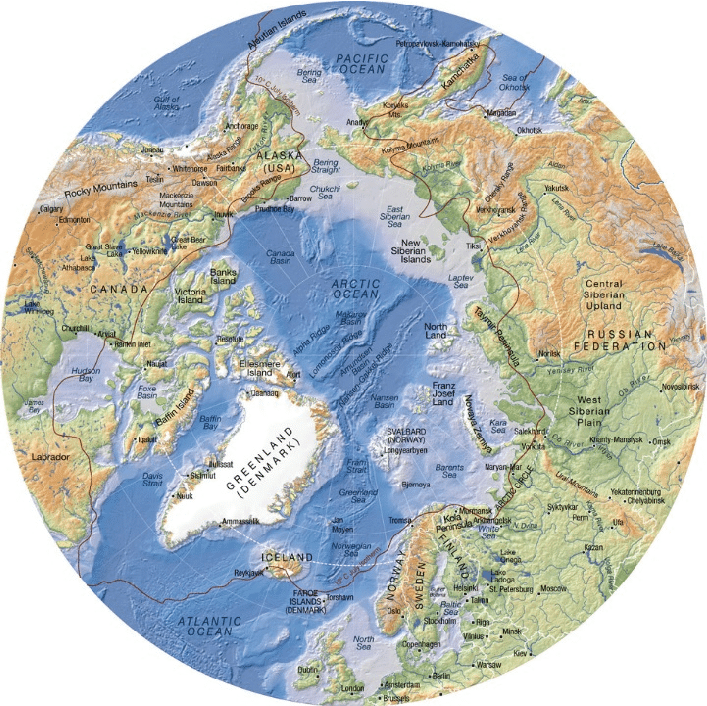
One of the most notable international initiatives of the Trump Administration has been its pursuit of Greenland. Recently the President has declared that the island is a national security issue and the US needs sovereignty over Greenland. It is currently an autonomous territory under the Danish flag. As of this recording, the US has stated it will not use military force to seize the island and there is a “concept of a deal” over the island. But this is an issue that is far from resolved. What is the US interest in Greenland? How does this campaign to acquire the territory frame the potential for future competition and conflict in the Arctic region? And what do American threats against allies, specifically members of the NATO alliance, indicate about the relationship between the US and Europe? [ dur: 58mins. ]
This program is produced by Doug Becker, Ankine Aghassian, Maria Armoudian, Anna Lapin and Sudd Dongre.
Politics and Activism, Governance / Law, War / Weapons, North Atlantic, Greenland
Podcast: Play in new window | Download
Subscribe:
The killing of Renee Good by ICE agent Jonathan Ross reflects increasingly aggressive and violent immigration & customs enforcement and policing in the US. What’s behind this growing violence in law enforcement?
Has ICE become more violent or are we just paying closer attention? What has changed with the organization under Trump?
On January 7, 2026, 37 year old Renee Good was shot and killed in Minneapolis by ICE agent Jonathan Ross. Since the killing, protests have surged in the Minnesota city. The White House and supporters of ICE state that Good was a domestic terrorist who threatened the ICE officer. But numerous accounts, videotaped taken by residents on their phones, have shown a very different story of the altercation. Residents, as well as elected officials have demanded that ICE leave the city and allow local law enforcement to maintain control. In response the Department of Homeland Security has indicated they will send hundreds more ICE officers and the President has threatened to declare war on the city via the Insurrection Act. On today’s show we will explore the history, policing, and impact of ICE on American cities. And we will explore the narratives told about these killings and how increasingly the visibility and transparency of policing has altered the narratives. [ dur: 58mins. ]
This program is produced by Doug Becker, Ankine Aghassian, Maria Armoudian, Anna Lapin and Sudd Dongre.
Politics and Activism, Governance / Law, police, Civil Liberties, Police Brutality
Podcast: Play in new window | Download
Subscribe:
What is the impact of the US invading Venezuela and kidnapping its president and first lady? How might it affect international law, regional security and the American reputation?
President Trump has declared he is the “Peace President” and claims to have ended 8 wars. While this is a dubious claim, he did become the first President to bomb 8 different nations in his first year in office. He then started 2026 with an invasion of Venezuela and a kidnapping of its President Nicolas Maduro as well as his wife Cilia Flores. They await trial in Brooklyn. The President has declared that the US will run the nation and will seize whatever oil it desires. The violation of Venezuelan sovereignty, the colonial approach to its resources, and the precedent this invasion is setting for the US throughout the Western Hemisphere is both significant and potentially quite threatening to peace. On today’s show, we will explore the legal, political and security implications of this brazen invasion. And we will explore what the future of US relations in the hemisphere as well as the President’s rampant use of the military means for the immediate future. [ dur: 58mins. ]
This program is produced by Doug Becker, Ankine Aghassian, Maria Armoudian and Sudd Dongre.
Politics and Activism, War / Weapons, Venezuela
Podcast: Play in new window | Download
Subscribe:
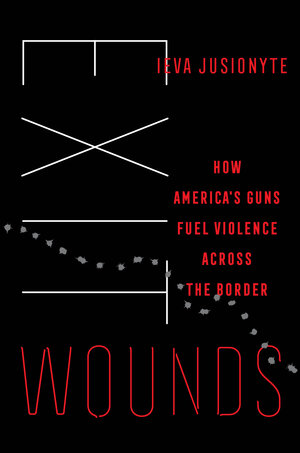
Beyond asylum seekers heading north, the problems of US/Mexico Border are also about the flow of guns and drugs. How can we understand the totality of problems related to the US southern border? What are the solutions?
We speak with Ieva Jusionyte the author of a new book Exit Wounds: How America’s Guns Fuel Violence Across the Border. [ dur: 58mins. ]
- Ieva Jusionyte is a legal and medical anthropologist and associate professor at Brown University. She is also the author of award-winning ethnography Threshold: Emergency Responders on the US-Mexico Border. She has been studying borders, violence, and security in Latin America and the United States for over fifteen years.
This interview was recorded May, 2024
This program is produced by Doug Becker, Ankine Aghassian, Maria Armoudian and Sudd Dongre.
Politics and Activism, Arms Trade, Gun Lobby, Militarism, Mexico, United States, Borders
Podcast: Play in new window | Download
Subscribe:
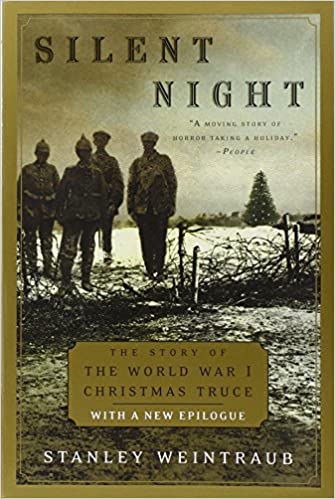
Why did soldiers on the front line ( in Flanders on 1914 ) of one of the deadliest wars lay down their arms and play soccer with the very men they were supposed to shoot?
We’ll revisit the Christmas truce of 1914 with Stanley Weintraub, author of, Silent Night: The Story of the World War I Christmas Truce. [ dur: 23 mins. ]
Then, on the Scholars’ panel, we explore the Science of Compassion. What is it and how does it impact society? Can we learn to be compassionate? [ dur: 35mins. ]
This program was first broadcast on Dec. 2017.
This program is produced with contributions from the following volunteers: Ankine Aghassian, Melissa Chiprin, Anaïs Amin, Tim Page, Mike Hurst and Sudd Dongre.
Arts and Humanities, Spirituality / Religion, Peace / Nonviolence, War / Weapons
Podcast: Play in new window | Download
Subscribe: