Tag Archives: Israel

Scholars’ Circle – Türkiye’s interest in the war with Iran and book author interview – “I Will Not Abandon You: Queer Women in Nazi Germany” – March 29, 2026

The Israeli and American war on Iran has vast regional implications with the potential to draw other countries into the conflict. Today we explore Türkiye’s interests in the war with a particular focus on the ramifications of arming the Kurds to fight against Iran. [ dur: 28mins. ]

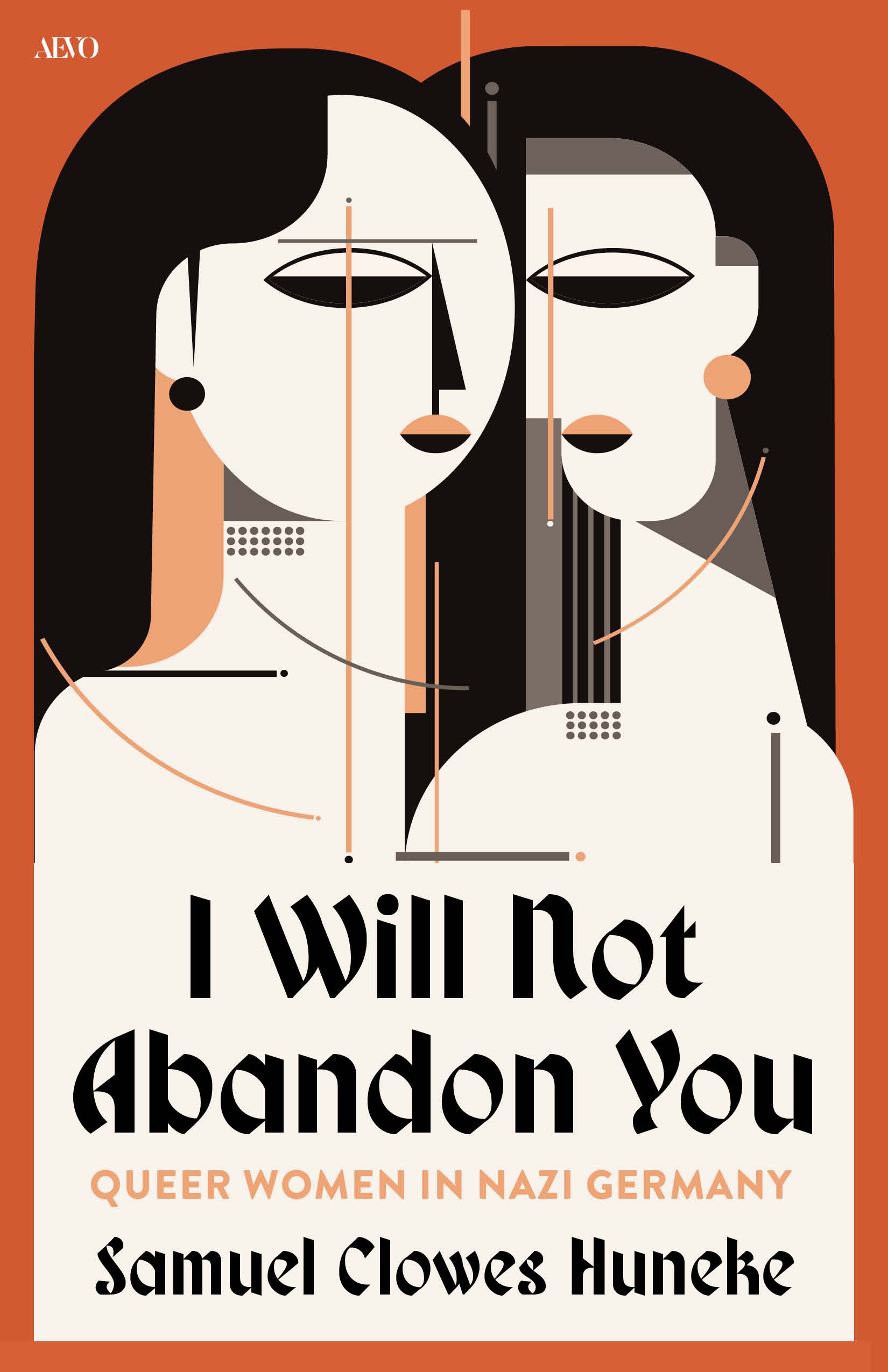
bookcover of I Will Not Abandon You- Queer women in Nazi Germany by Samuel Clowes Huneke shows abstract art of two women facing each other.

There were many victims of Nazi atrocities and genocide but one group has only recently been given recognition for the oppression they endured: the LGBTQ+ community. Today we explore the specific treatment and oppression of the lesbian community under Nazi Germany and how their experiences influence the larger conversation about women under Nazism. We interview the author on his new book titled, “I Will Not Abandon You: Queer Women in Nazi Germany” (Toronto University Press, April 2026). [ dur: 30mins. ]

This program is produced by Doug Becker, Ankine Aghassian, Maria Armoudian, Anna Lapin and Sudd Dongre.

Politics and Activism, Human Rights, War / Weapons, Gender, Lesbian/Gay/Bi/Trans, Iran, Israel, Turkey, Refugee 

Scholars’ Circle – War spreads to Lebanon – March 22, 2026

Recent escalations in Israel’s war kill or wound the equivalent of one classroom of children every day, according to the deputy chief of the UN Children Fund (UNICEF). The United Nations Interim Force in Lebanon said on Thursday that it has recorded more than 10,000 air and ground violations inside Lebanese territory since the ceasefire between Israel and Hezbollah came into effect at the end of 2024. Israel’s attack on Lebanon has created both a humanitarian crisis and a potential collapse of the Lebanese government. We explore this attack, the role of Hezbollah, and the future of Lebanon from two different expert perspectives. Our guests join us from Lebanon. [ dur: 58mins. ]

This program is produced by Doug Becker, Ankine Aghassian, Maria Armoudian, Anna Lapin and Sudd Dongre.

Politics and Activism, War / Weapons, Refugees, Middle East, Israel, Humanitarian Crisis

Scholars’ Circle – Iran War and War Crime Analysis – Insights on the Study Powerful People Lack Empathy – March 15, 2026

The Israeli/American War against Iran continues. On today’s panel we wrestle with the question of the war’s legality. In doing so, we reject US Secretary of Defense Pete Hegseth’s assertion that the US will fight this war with “no stupid rules of engagement,,” and his assertion that there will be “no politically correct wars,” and “no nation-building quagmire.” While he dismisses the importance of international laws on war, we do not. So, we ask, is this war legal? Are the tactics of Israeli and American militaries legal? Is Iran’s response aligned with international law? [ dur: 40 mins. ]

Studies show that powerful people feel less empathy. What does that mean for societies? [ dur: 18mins. ]

This program is produced by Doug Becker, Ankine Aghassian, Maria Armoudian, Anna Lapin and Sudd Dongre.

Politics and Activism, War / Weapons, Middle East, Iran, Israel, humanity

Scholars’ Circle – Insights on US and Israel Bombing Iran and Its Wider Effects on the Middle East and the World – March 8, 2026

The attack on Iran by the US and Israel will have devastating consequences for Iran and the region. Is the intent to foment ethnic conflicts as a means to weaken Iran? What are the greater implications of this war, for Iran, the region, and the globe? What are the possibilities of successful resistance to American and Israeli aggression for an unpopular war, domestically and around the world? [ dur: 58mins. ]

This program is produced by Doug Becker, Ankine Aghassian, Maria Armoudian, Anna Lapin and Sudd Dongre.

Politics and Activism, War / Weapons, Middle East, Iran, Israel. USA 

Scholars’ Circle – Recognizing Palestinian statehood and what that would mean for the war in Gaza – August 17, 2025

After nearly two years of a war on Gaza, some countries in the West have indicated that they intend to recognize Palestine as its own state. What would such recognition mean for the conflict and how can the war end? [ dur: 58mins. ]

Scholars’ Circle – Israel and Iran War – June 22, 2025

We look at the history of conflict and outcome in the past to understand the attacks between Israel and Iran to control Nuclear capabilities of Iran. What is the humanitarian and political impact of this war? On both Iran and on Israel. What is the impact on the region? Is this war legal, based on the laws of war? Principle of  JUS AD BELLUM. And how would American intervention on behalf of Israel escalate the war, and complicate the war. [ dur: 58mins. ]

Note: This recording was made before US bombing of Iran’s Nuclear Facility on June 22, 2025.

This program is produced by Doug Becker, Maria Armoudian, Ankine Aghassian, and Sudd Dongre.

Scholars’ Circle – Determining genocide and other human rights violations of the law ; Dark side of democracy – April 21, 2024

April is Genocide Awareness month. Two of the worst genocides in history, the Hutu killing of Tutsis in Rwanda and the Ottoman genocide against Armenians, began in April. We explore genocide with two specific questions: Who internationally makes a determination that violence and atrocities are in fact genocide? And what if anything changes when there is a finding that atrocities are genocide?

We explore whether a legal approach is the best way to determine whether political violence and atrocities are genocide or is a political or social approach more effective. And does discourse on genocide crowd out discussions of other crimes, such as war crimes? We draw insights from history and contemporary issues. [ dur: 42mins. ]

When does democracy have a dark side? Our guest says that majorities can and do oppress minorities in the name of majoritarian democracy. [ dur: 16mins. ]

This program is produced by Doug Becker, Ankine Aghassian, Maria Armoudian and Sudd Dongre.

Scholars’ Circle – International Laws on occupation of territories and war crimes by state and non-state actors – January 21, 2024

What responsibilities do occupiers have in their occupation of territories? And is there a legal requirement to eventually end the occupation? [ dur: 28mins. ]

In the laws of war, countries do have the right to defend themselves. But what do those laws require in the process of waging war? How does this apply to Israel’s war in Gaza? And what legal rights do non-state actors have for self-determination? [ dur: 28mins. ]

This program is produced by Doug Becker, Ankine Aghassian, Maria Armoudian and Sudd Dongre.

Scholars’ Circle – Which mistakes Israel is likely to make in Gaza and Book Author interview – A Fear of Too Much Justice: Race, Poverty, and the Persistence of Inequality in the Criminal Courts – October 29, 2023

Rage and a desire for vengeance after 9/11 drove the US to violate human rights on a mass scale. What were those mistakes and what lessons do they offer to others dealing with political violence? How much does rage and demands for vengeance undermine peace? [ dur: 28mins. ]

  • Steve Swerdlow, esq. is Associate Professor of the Practice of Human Rights in the Department of Political and International Relations at the University of Southern California. A human rights lawyer and expert on the former Soviet region, Swerdlow was Senior Central Asia researcher at Human Rights Watch, heading the organization’s work on Uzbekistan and Tajikistan, and founding its Kyrgyzstan field office. He worked as a human rights monitor for the Union of Council for Soviet Jews (UCSJ) as their Caucasus monitor in Armenia, Azerbaijan, and Georgia as well as with the International Organization for Migration (IOM) in Russia.
  • Brent Sasley is Associate Professor of Political Science at the University of Texas, Arlington. He is the author of the book Politics in Israel: Governing a Complex Society and the book chapter “The End of Oslo and The Second Intifada, 2000-2005.”

Then, How much does race and class determine legal outcomes in the United States? What role does the prosecutor play in the justice system?
We speak with the co-author of a new book A Fear of Too Much Justice: Race, Poverty, and the Persistence of Inequality in the Criminal Courts. Co-authors are legendary death penalty opponent Stephen Bright and legal scholar James Kwak. [ dur: 28mins. ]

  • Our guest James Kwak is a former professor of law at the University of Connecticut and chairperson of the board of the Southern Center for Human Rights. His co-author is Stephen Bright. He teaches law at Yale and Georgetown Universities. He was director of the Southern Center for Human Rights and won multiple capital cases in the Supreme Court.

From the publisher:
Almost 70 years ago Supreme Court Justice Hugo Black wrote there “can be no equal justice where the kind of trial a man gets depends on the amount of money he has.” In THE FEAR OF TOO MUCH JUSTICE: Race, Poverty, and the Persistence of Inequality in the Criminal Courts (The New Press; June 20; 2023), legendary death penalty opponent Stephen Bright and legal scholar James Kwak show the myriad ways the US criminal legal system fails to live up to this ideal of fairness: Innocent people are condemned to death and convicted of crimes because they cannot afford lawyers and because of the color of their skin. Racial discrimination in jury selection still lives in communities that have substantial Black and Latino populations. The mentally disabled are incarcerated instead of given the treatment they need, while the poor are processed through many courts with little or no legal representation in an assembly-line fashion. And many courts act as centers of profit whose main purpose is to raise money by imposing fines on the most vulnerable in their community and jailing them when they cannot pay.

But Bright and Kwak also see the promise of meaningful change on the horizon. They point to jurisdictions across the political spectrum that have made significant progress. The use of the death penalty has plummeted, and the authors see a future where it will remain in only the most ardent holdouts. Public defender offices that protect clients from wrongful convictions have been established across the country, and many places have reduced the use of cash bail and stopped imposing fines and fees on people who cannot afford them.

The book makes the case that prosecutors have too much power and defense lawyers are often out-gunned and incentivized to encourage plea bargains. How should the system rectify this? What is the first step in fixing this imbalance?

This program is produced by Ankine Aghassian, Doug Becker, Mihika Chechi, Melissa Chiprin, and Sudd Dongre.

Scholars’ Circle – Israel’s democratic challenge – April 23, 2023

Benjamin Netanyahu’s efforts to give Israel’s Parliament the ability to overturn high court decisions has been met with widespread protests. What are the stakes of these protests? What’s the democratic and political future for Israel? [ dur: 58mins. ]

This program is produced by Ankine Aghassian, Doug Becker, Mihika Chechi, and Sudd Dongre.