Scholars’ Circle – What is Social Media addiction? Social Media Algorithm Biases Interfere With Online Interaction – February 22, 2026

How do people become addicted to social media and what are the implications of such an addiction? [ dur: 30mins. ]

Most of our activity on the internet interacts with posts, memes and videos that are driven by algorithms. How might algorithms be biased, racist, or sexist, and how might they amplify those biases in us? [ dur: 28mins. ]  Full length of this interview can be found here.

This program is produced by Doug Becker, Ankine Aghassian, Maria Armoudian, Anna Lapin and Sudd Dongre.

Politics and Activism, Science / Technology, Computers and Internet, Racism 

Scholars’ Circle – Health care disparities on the basis of race in the U.S.- February 15, 2026

Health care outcomes in the U.S. differ substantially depending on race. How much are health care discrepancies based on structural and historical racism? What needs to change to promote health justice in the U.S. and what kinds of policies are needed to promote this change? How important is diversity of health care providers in building a more just healthcare system? [ dur: 58mins. ]

This program is produced by Doug Becker, Ankine Aghassian, Maria Armoudian, Anna Lapin and Sudd Dongre.

Health, Politics and Activism,  Medicine , Racism

Scholars’ Circle – State and Nature, the effects of climate change on security; Insights on street protests in Iran – February 8, 2026

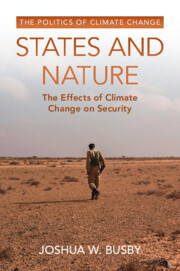
Under what circumstances might climate change lead to negative security outcomes? Over the past fifteen years, a rapidly growing applied field and research community on climate security has emerged. While much progress has been made, we still don’t have a clear understanding of why climate change might lead to violent conflict or humanitarian emergencies in some places and not others.

book cover showing dry landscape with one person walking through it. Book title is State and Nature, the effects of climate change on security.

Busby develops a novel argument – based on the combination of state capacity, political exclusion, and international assistance – to explain why climate leads to especially bad security outcomes in some places but not others. This argument is then demonstrated through application to case studies from sub-Saharan Africa, the Middle East, and South Asia. This book will provide an informative resource for students and scholars of international relations and environmental studies, especially those working on security, conflict and climate change, on the emergent practice and study of this topic, and identifies where policy and research should be headed. [ dur: 38mins. ]

With protests rocking Iran, how much are these protests historically consistent with the long history of protests in Iran. We explore this history in light of the new round of protests How much more violent has the Iran state been against protesters? [ dur: 20mins. ]

This program is produced by Doug Becker, Ankine Aghassian, Maria Armoudian, Anna Lapin and Sudd Dongre.

Climate Change, Human Rights, War / Weapons,  Refugees, Bangladesh, India, Iran, Syria, Lebanon, Security 

Scholars’ Circle – Trump’s Board of Peace & Gaza’s future – February 1, 2026

In support of the US peace plan for Gaza, President Trump proposed a “Board of Peace” as a transitional governmental authority to ensure Israeli military withdrawal from the territory. It was empowered by the UN Security Council to act on the organization’s behalf as a presumably neutral body to ensure the delivery of humanitarian assistance, rebuild the region that has been physically devastated from war, and oversee security in the return of refugees who have fled the conflict. But as introduced by the American President at the World Economic Forum meetings in Davos in January, it has become a controversial body. Trump advanced a vision of the body, one which includes a payment of one billion dollars (to whom it is still unclear) that could challenge the UN. On today’s show we start with an exploration of this new vision for the organization advanced by the US. [ dur: 28mins. ]

The Board of Peace was initially and ostensibly created to govern Gaza in light of a peace agreement with the intention of removing Israeli military forces in exchange for a neutral transitional government. This was endorsed by the United Nations Security Council in Resolution 2803 with very specific tasks outlined, including aiding in the creation of Palestinian governance, the physical and economic reconstruction of the war-torn territory, the delivery of public services and humanitarian assistance, and the return of refugees. In this segment, we examine the Board’s ability to accomplish its defined set of goals. [ dur: 30mins. ]

This program is produced by Doug Becker, Ankine Aghassian, Maria Armoudian, Anna Lapin and Sudd Dongre.

Politics and Activism, Middle East, Occupied Palestine